When selecting aluminum ceiling panels, many procurement officers, renovation project managers, and foreign trade professionals often have a host of questions: Is a thicker panel always better? What is the difference between recycled aluminum and virgin (primary) aluminum? Which surface finish is appropriate for a given environment? With such a wide range of market prices—where panels of the same dimensions can vary significantly in cost—what exactly accounts for these differences? Choosing the wrong material can lead to issues ranging from yellowing, deformation, and poor flatness after installation, to project inspection failures and a high volume of after-sales complaints. In the context of foreign trade, it can even result in customer grievances, returns, or exchanges.
First, let’s clear up a common misconception: a thicker aluminum panel is not necessarily better. The key lies in the combination of an appropriate thickness and a high-quality base material.
Aluminum ceiling panels on the market typically come in thicknesses of 0.5mm, 0.6mm, 0.7mm, 0.8mm, 0.9mm, and 1.0mm, categorized into residential and commercial/industrial (project-grade) specifications. For residential kitchens and bathrooms, a thickness of 0.5–0.7mm is generally sufficient; such panels offer a stable base and low self-weight, ensuring they do not sag when installed with standard suspension grids (keels). For large-scale commercial ceilings—such as 600×600mm project panels, long-format panels, or perforated acoustic panels—a thickness of 0.7–1.0mm is recommended. These provide greater rigidity, preventing warping across large installation areas.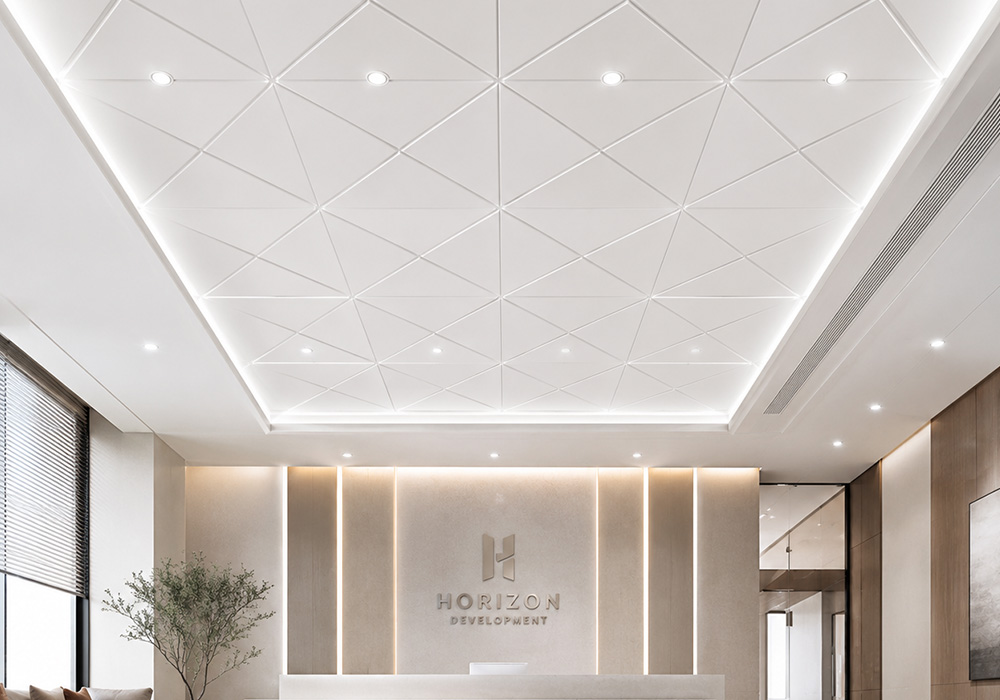
It is crucial to distinguish between base materials. Virgin (primary) aluminum offers excellent toughness and minimal impurities; it ensures strong adhesion for coatings and resists oxidation or peeling over long-term use. In contrast, recycled aluminum often contains many impurities, resulting in a “false” high hardness—it is actually brittle and prone to developing micro-cracks during processing or stamping. Over time, these panels are susceptible to deformation and coating detachment when exposed to temperature fluctuations or humidity. Many low-priced panels are made from recycled aluminum; while they may appear fine initially, defects typically emerge within six months to a year of use.
Second, understand the surface coating processes to select the right product for your specific environment:
1. Roller-coated panels: The standard, mainstream choice. They feature a uniform coating, are resistant to oil and stains, and offer excellent value for money. Ideal for kitchens, general residential interiors, and commercial ceilings, they are also easy to clean by wiping.
2. Laminated (film-coated) panels: Highly decorative with a rich variety of colors. While perfect for residential projects, they have poor heat resistance and are unsuitable for kitchens exposed to long-term high temperatures and grease.
3. Electrostatic powder-coated panels: Highly resistant to corrosion, weathering, moisture, and rust. These are commonly used in underground parking garages, industrial facilities, and damp environments.
4. Fluorocarbon-coated (PVDF) panels: Offering superior weather resistance, UV protection, and corrosion resistance, these are ideal for outdoor use, humid coastal regions, and international projects—though they come at a higher price point.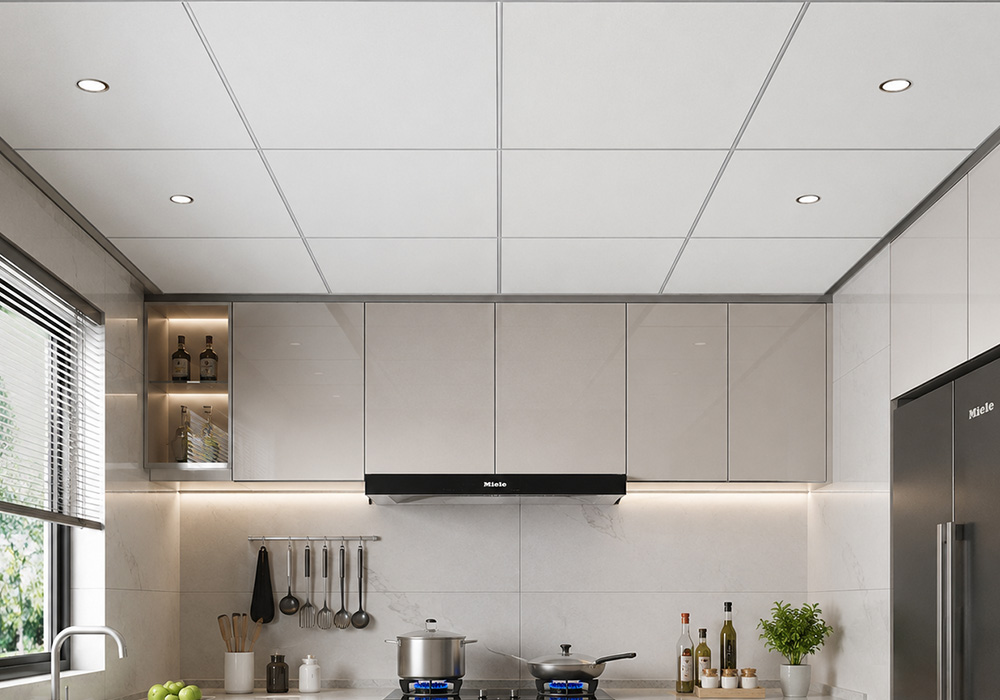
A common mistake among buyers is focusing solely on the price of the panels while neglecting the supporting grid system (keels). Even the highest-quality aluminum ceiling panels can lead to issues—such as sagging, rattling, or even panels falling—if paired with substandard, thin-gauge keels. The dimensions of the panel-to-keel connection must be precise; different panel types and thicknesses require specific engagement depths. Purchasing panels and keels separately often results in loose fits or insecure connections.
Xi’an Bochen Yaoding Trading Co., Ltd. is a comprehensive manufacturer of ceiling materials, integrating R&D, production, sales, and exports. Our facility spans over 10,000 square meters and houses 10 automated production lines, handling everything from sheet cutting and sizing to stamping and forming in-house. We provide tailored selection advice based on your specific application—whether for residential kitchens and bathrooms, sterile hospital environments, noise-reducing office ceilings, moisture-resistant garage ceilings, or international export orders. We recommend the ideal base material, thickness, and coating, and manufacture the matching grid system to ensure perfect compatibility, eliminating the need for on-site modifications.
Before finalizing your purchase, we can provide samples so you can personally verify the base material, coating quality, and structural rigidity. This helps you avoid the pitfalls of low-quality, cheap products and reduces the risk of post-installation issues.