Are you a construction foreman, a procurement officer for a renovation firm, or a project manager for an industrial park or office building? Do supply chain issues with ceiling materials frequently derail your project schedule? When deadlines are tight and your project specifications call for aluminum ceiling panels and a grid system (furring channels/joists), sourcing from small, informal workshops often leads to problems: color inconsistencies between batches, uneven perforation patterns, or substandard surface coatings. You might encounter undersized grid components that fail on-site inspections, necessitating replacements. If panels and grid components come from different suppliers, their specifications may not align—forcing workers to cut and adjust materials on-site, which delays the schedule and inflates labor costs. Furthermore, for large-scale projects, a supplier’s insufficient production capacity can lead to shipping delays, pushing back key project milestones and leaving you vulnerable to penalties from the client for missing deadlines.
In commercial and industrial settings—such as offices, retail spaces, hospitals, underground parking garages, or manufacturing plants—ceiling areas are extensive. These environments demand high standards for flatness, fire resistance, and aesthetic uniformity. They also require precise integration for lighting fixtures, air vents, and fire-safety access panels. Consequently, material compatibility and a stable, reliable supply chain are the top priorities for procurement. Any error in materials can put the entire project in a precarious position.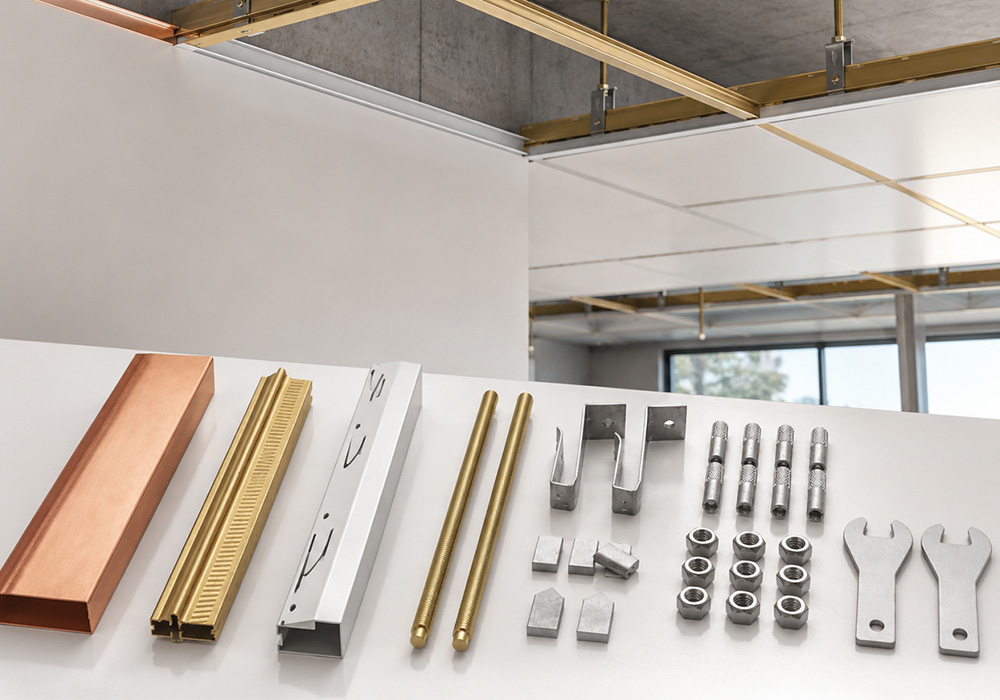
Modular aluminum ceiling panels are the industry standard for commercial and industrial projects. Available in common sizes like 600×600 mm or 300×1200 mm, these panels come in various configurations—such as flat, perforated (for sound absorption), or micro-perforated (for noise reduction)—to meet specific needs: noise control in offices, heat dissipation in server rooms, hygiene standards in hospitals, or moisture resistance in underground parking garages. As a non-combustible material, aluminum meets strict fire safety regulations for commercial construction. The supporting grid system—comprising main runners, cross tees, hangers, and connectors—ensures that large-scale ceilings remain flat and rigid over time, resisting sagging, loosening, or detachment, even in areas with high foot traffic or vibrations from equipment.
For commercial and industrial projects, the greatest risks are receiving the wrong materials or facing supply shortages and delays. Partnering directly with an integrated, primary manufacturer allows you to bypass the risks associated with third-party distributors. Xi’an Bochen Yaoding Trading Co., Ltd. operates its own production facility spanning over 10,000 square meters, equipped with 10 production lines. We handle the entire manufacturing process in-house—from sheet metal shearing and stamping to surface treatment—ensuring the synchronized production of aluminum ceiling panels and their supporting grid systems (furring channels). Every component undergoes rigorous, standardized quality inspection, and our panels are precision-engineered to fit perfectly into the grid slots. This allows for immediate installation upon arrival at the site, eliminating the need for any secondary processing.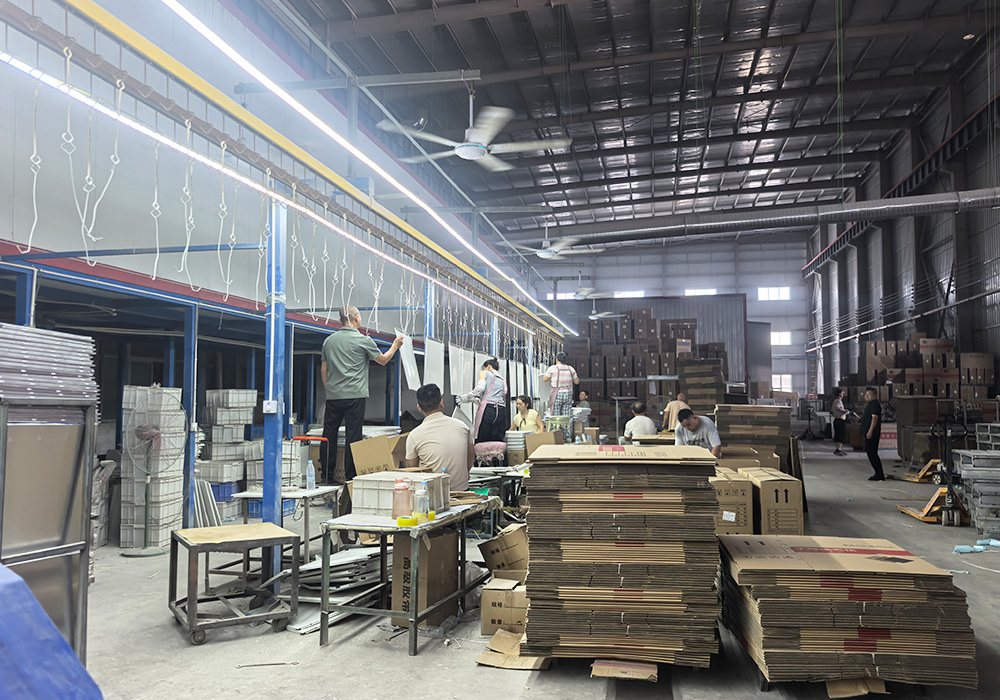
Whether for large-scale domestic commercial projects or international export orders, we offer full customization—including dimensions based on your blueprints, specialized surface finishes, and tailored packaging solutions. With robust production capacity and stable scheduling, we provide comprehensive support, including the provision of samples for inspection and flexible, phased bulk shipments. If you are working on ceiling projects for office buildings, retail spaces, or industrial parks and require a reliable, long-term supplier for aluminum ceiling panels and grid systems, we offer a one-stop procurement solution. We ensure all materials are supplied as a complete package, helping you meet project deadlines and pass inspections on time—sparing you the hassle of coordinating with multiple different vendors.